Hızlı erişim, şık tasarım: Yeni sitemizi keşfedin. Kullanıcı deneyimini önceliğimiz yaptık, baştan aşağı yenilendik.
1500 TL ÜZERİ SİPARİŞLERDE ÜCRETSİZ KARGO
Hızlı erişim, şık tasarım: Yeni sitemizi keşfedin. Kullanıcı deneyimini önceliğimiz yaptık, baştan aşağı yenilendik.
1500 TL ÜZERİ SİPARİŞLERDE ÜCRETSİZ KARGO
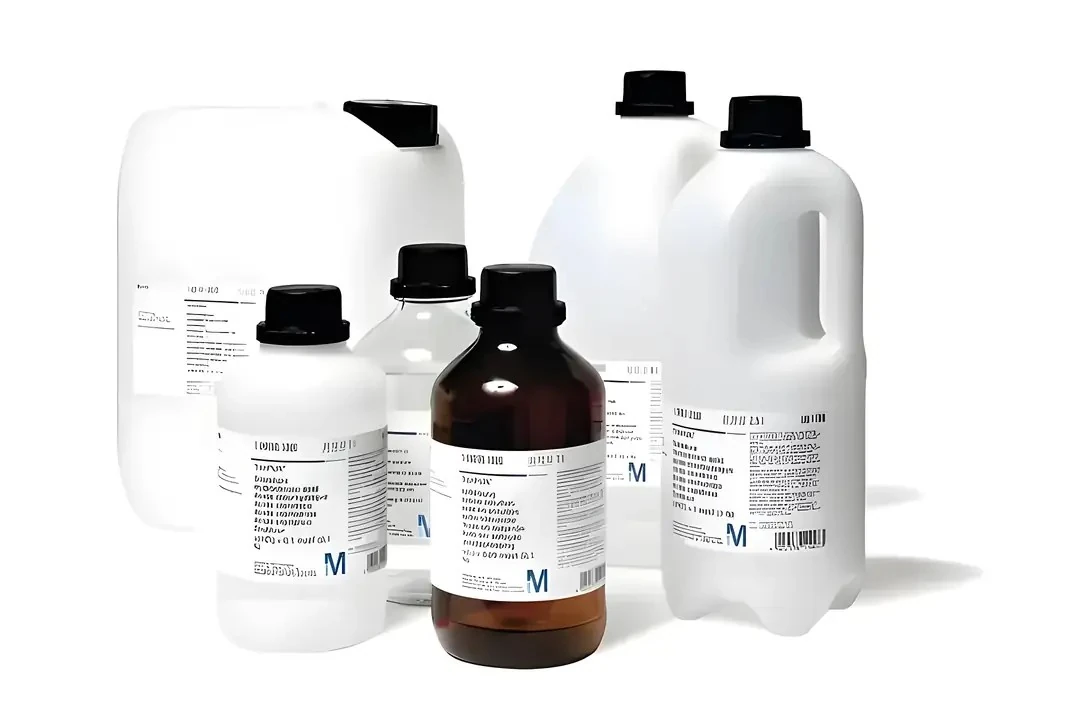
Merck 109114 1000 Potassium Hydroxide Solution in Ethanol 1 LT.

Merck 109114 1000 Potassium Hydroxide Solution in Ethanol 1 LT.

Ürün Kodu:1091141000
Hemen Al
WhatsApp
SEPETE EKLE
Ürün Açıklaması
\n\n\n\n\n\n\n\n\n\n\n\n
Description
Catalogue Number109114
\n\n\n\n\n\n\n\n\n\n\n\n\n\n\n\n\n\n\n\n\n\n
Product Information
GradeReag. Ph Eur
HS Code3822 90 00
Quality LevelMQ200
\n\n\n\n\n\n\n\n\n\n\n\n\n\n
Applications
ApplicationPotassium hydroxide solution in ethanol c(KOH) = 0.5 mol/l (0.5 N) Titripur® Reag. Ph Eur,Reag. USP. ph value 14 (H₂O, 20 °C).
\n\n\n\n\n\n\n\n\n\n\n\n\n\n\n\n\n\n\n\n\n\n\n\n\n\n\n\n\n\n\n\n\n\n\n\n\n\n\n\n\n\n
Physicochemical Information
Boiling point78.3 °C (1013 hPa) (ethanol)
Density0.85 g/cm3 (20 °C)
Explosion limit3.5 - 15.0 %(V) (ethanol)
Flash point12 °C (ethanol)
Ignition temperature425 °C (ethanol)
Melting Point-114.5 °C (ethanol)
pH value14 (H₂O, 20 °C)
Vapor pressure59 hPa (20 °C)
\n\n\n\n\n\n\n\n\n\n\n\n\n\n\n\n\n\n\n\n\n\n\n\n\n\n\n\n\n\n\n\n\n\n\n\n\n\n
Safety Information according to GHS
Hazard Pictogram(s)Hazard Pictogram(s)\nHazard Pictogram(s)\n
Hazard Statement(s)H225: Highly flammable liquid and vapour.\nH290: May be corrosive to metals.\nH314: Causes severe skin burns and eye damage.
Precautionary Statement(s)P210: Keep away from heat, hot surfaces, sparks, open flames and other ignition sources. No smoking.\nP233: Keep container tightly closed.\nP234: Keep only in original packaging.\nP280: Wear protective gloves/ protective clothing/ eye protection/ face protection/ hearing protection.\nP303 + P361 + P353: IF ON SKIN (or hair): Take off immediately all contaminated clothing. Rinse skin with water.\nP305 + P351 + P338: IF IN EYES: Rinse cautiously with water for several minutes. Remove contact lenses, if present and easy to do. Continue rinsing.\nP403 + P233: Store in a well-ventilated place. Keep container tightly closed.
Signal WordDanger
Storage class3 Flammable liquids
WGKWGK 1 slightly hazardous to water
Disposal1\nStrongly contaminated halogen-free organic solvents: container A.
\n\n\n\n\n\n\n\n\n\n\n\n\n\n
Safety Information
Categories of dangerhighly flammable, corrosive
\n\n\n\n\n\n\n\n\n\n\n\n\n\n
Storage and Shipping Information
StorageStore at +15°C to +25°C.
\n\n\n\n\n\n\n\n\n\n\n\n\n\n\n\n\n\n\n\n\n\n
Transport Information
Declaration (railroad and road) ADR, RIDUN 2924 , 3 (8), II
Declaration (transport by air) IATA-DGRUN 2924 , 3 (8), II
Declaration (transport by sea) IMDG-CodeUN 2924 , 3 (8), II, Segregation Group: 18 (Alkalis)
\n\n\n\n\n\n\n\n\n\n\n\n\n\n\n\n\n\n\n\n\n\n\n\n\n\n\n\n\n
Specifications
Formliquid
Amount-of-substance concentration0.4975 - 0.5025
Measurement uncertainty+/- 0.0015
TraceabilityNIST SRM
The amount-of-substance concentration of this volumetric solution is analyzed by our quality control laboratory of Merck KGaA, Darmstadt, Germany according to DIN EN ISO/IEC 17025.\nThe concentration is determined by volumetric titration and refers to 20°C.\nThe amount-of-substance concentration of this volumetric solution is traceable to a primary standard reference material (SRM) from the National Institute of Standards and Technology, Gaithersburg, USA (NIST SRM 350 benzoic acid) by means of volumetric standard benzoic acid (article number 1.02401), certified reference material according to ISO 17034, analyzed by our accredited calibration laboratory of Merck KGaA, Darmstadt, Germany according to DIN EN ISO/IEC 17025. The uncertainty is expressed as expanded measurement uncertainty with a coverage factor k=2 covering a confidence level of 95%.\nNote: The titer is a correction factor to correct for variations of the volumetric solution, the titration equipment, the temperature and other laboratory conditions. For correct titration results it is recommended to determine a titer with the laboratory specific equipment and under laboratory specific conditions directly after opening a new bottle and at regular time intervals.

Çok Satanlar